ERP Systems for Small Businesses: Discover the Right Solution for Your Needs
Continue reading
Summary
 14 min.
Many small teams start out with individual tools for CRM, tasks, or accounting. As complexity grows, however, disconnected workflows, duplicate data entry, and a lack of overview emerge. Workflows become confusing, data is scattered, and workflows no longer connect smoothly.
An ERP system for small businesses bundles core business processes into a single piece of software and creates a shared data foundation for customers, projects, and operations. The goal is to link information together and make work processes more efficient.
In practice, however, traditional ERP solutions for small businesses are often oversized. The extensive range of features and the associated costs are not always proportionate to actual needs. At the same time, a patchwork of disconnected tools is not an optimal solution either. A middle path is therefore often the most sensible choice: leaner systems or business software with ERP functions that cover central processes without creating unnecessary complexity.
What Is an ERP System?
ERP stands for "Enterprise Resource Planning" and describes a software solution that connects central business processes within a company. The goal is to bundle all important data and workflows, such as customers, projects, inventory management, finances, documents, invoicing, and time tracking, into a single system. The invoicing part has grown its own tooling in the meantime, because electronic invoicing software has to emit a structured format rather than a PDF.
Especially for small businesses, the question of actual need arises here. ERP systems offer a wide variety of functions, including inventory management, accounting, HR administration, financial controlling, CRM and project management.
However, not every company needs this complete range of functions from the outset. While in some cases comprehensive coverage of all business areas makes sense, in other situations a structured organization of core processes such as customers, projects, and communication is initially sufficient, particularly when there are no complex requirements such as inventory management or production.
In addition, traditional ERP systems often involve higher implementation effort, longer rollout times, and corresponding costs. Solutions like SAP, for example, are designed for large enterprise structures and are in many cases too extensive or economically unviable as ERP software for small companies.
For this reason, different software approaches are used depending on the starting point. In addition to traditional ERP systems, many companies use business software that focuses on specific core processes, either as a complement or as an alternative. This type of software can cover individual ERP functions but does not fully replace a complete ERP system.
ERP System for Small Businesses: Functions & Requirements
A practical ERP system focuses on functions that are used daily and that efficiently manage operational resources such as time, money, and personnel. The goal is to avoid Excel chaos, reduce manual errors, and make all data centrally and instantly available.
The most important functions include:
- Inventory management and logistics
- Finance and accounting
- CRM with project management
- Time tracking
- HR administration
- Production planning
ERP in Small Companies: Full Scope vs. Partial Solutions
For small businesses and startups, the right solution depends heavily on the individual use case. In practice, the following pattern is often observed: Teams that mainly run client work are usually better served by project management software for startups, which covers that core without warehousing or production.
- Companies with complex structures or industry-specific requirements rely on full ERP systems to cover all business areas in an integrated way
- Other companies only use selected functional areas, for example for customer management, projects, or internal workflows
Accordingly, different software approaches are used in practice. Alongside traditional ERP systems, there are solutions that focus on specific core processes and connect them with one another. These systems can cover individual ERP-related functions and help structure workflows and make data centrally available. At the same time, the range of functions usually remains limited to certain areas.
The key takeaway is therefore one of classification: not every piece of software that connects multiple processes is a complete ERP system. Conversely, a fully comprehensive ERP is not strictly necessary in every scenario. For small companies, it is essential to clearly define their own processes and requirements and, based on this, to decide what depth of system is actually needed.
ERP Systems for Small Businesses Compared
| Tool | Area of Use | Strengths | Price (from) | Trial |
|---|---|---|---|---|
| microtech | All-round ERP | Automation, Accounting | from €199/month | On request |
| weclapp | ERP/CRM | Integration, Cloud | from €39/user/month | Available |
| orgaMAX | Office & Inventory | Easy to use | from €49/month | Available |
| Haufe X360 | Cloud ERP | Flexibility, Interfaces | from approx. €449/month | On request |
| Sage 50 | SME ERP | Accounting, Inventory | from approx. €25/month | Available |
| Xentral | E-Commerce | Automation | from €99/month | Available |
| MRPeasy | Production | Planning, Traceability | from approx. €35.75/user/month | Available |
| ZEP | Services | Time tracking | from €2/month | Available |
| Scoro | Projects | CRM + Projects | from approx. €18.90/user/month | On request |
| Billbee | E-Commerce | Multichannel | from €9/month | Available |
| Odoo | Modular ERP | Flexibility | free / from €19.90/user/month | Available |
| ERPNext | Open Source ERP | Free, many modules | €0 (Software) | Open Source |
| Unusual Suite * | CRM + Projects | All-in-One, Integration | free / from €29/month | Available |
microtech
weclapp
orgaMAX
Haufe X360
Sage 50
Xentral
MRPeasy
ZEP
Scoro
Billbee
Odoo
ERPNext
Unusual Suite *
Detailed Comparison of ERP Tools
Full-Scope ERP Solutions
microtech
microtech is a modular ERP solution from Germany with a strong focus on inventory management, financial processes, and automation.
✓ Strengths: Automation, accounting, comprehensive inventory management.
✗ Weaknesses: Sometimes extensive for simple requirements; onboarding required; entry costs higher depending on the package.
€ Price: Entry from approx. €199/month for basic packages, variable depending on functional scope.
Suitable for: Small to medium-sized companies focused on inventory management, trade, or product-related processes.
Classification: Often extensive for very small teams with simple requirements, but well scalable for growing companies.
weclapp
weclapp is an ERP and CRM platform that combines various business processes such as inventory management, accounting, and project management within an integrated interface.
✓ Strengths: Integration, broad functional coverage, good usability.
✗ Weaknesses: Costs increase with the number of users and modules; customizations required for highly individual needs.
€ Price: Entry from approx. €39/user/month, significantly higher depending on package and area of use.
Suitable for: SMEs and startups that want to map multiple business areas in a single system.
Classification: Broad ERP system used for both services and trade.
orgaMAX
orgaMAX is a business software for small companies with a focus on office organization, accounting, and inventory management.
✓ Strengths: Easy to use, quick onboarding, many functions integrated directly.
✗ Weaknesses: Limited extensibility for more complex requirements.
€ Price: Entry from approx. €49/month, variable depending on package and add-ons.
Suitable for: Small businesses, freelancers, and growing SMEs focused on simple processes.
Classification: Particularly well suited for getting started; may reach its limits as complexity increases.
Haufe X360
Haufe X360 is a flexible cloud ERP with a strong focus on customization and integration into existing system landscapes.
✓ Strengths: High flexibility, many interfaces, modular structure.
✗ Weaknesses: Implementation is complex; rollout usually partner-supported.
€ Price: Variable; entry according to the provider from approx. €449/month, depending on configuration.
Suitable for: Mid-sized companies with individual requirements and integration needs.
Classification: Powerful ERP, often too extensive for smaller teams without an implementation budget.
Sage 50
Sage 50 is an established ERP and accounting solution with a focus on order processing, inventory management, and financial processes.
✓ Strengths: Accounting, inventory management, stable standard processes.
✗ Weaknesses: Less flexible than modern SaaS solutions; functional scope varies depending on the version.
€ Price: Entry from approx. €25/month per workstation (accounting only), from €35/month as a complete solution, usually with a minimum number of users.
Suitable for: Small companies focused on accounting and standardized processes.
Classification: Classic ERP/financial accounting solution with a stable foundation; less geared toward modern workflows.
Xentral
Xentral is an ERP system focused on e-commerce, trade, and digital order processes.
✓ Strengths: Automation, strong integration with shops and marketplaces.
✗ Weaknesses: Often not the first choice for pure service companies.
€ Price: Entry from approx. €99/month in the starter plan with restrictions; regular packages are higher and may be usage-based.
Suitable for: E-commerce and trade companies with growing order volumes.
Classification: Specialized ERP solution for trade processes.
MRPeasy
MRPeasy is an ERP system for small manufacturing companies with a focus on production planning and inventory management.
✓ Strengths: Production planning, traceability, inventory management.
✗ Weaknesses: CRM available but not the focus of the solution.
€ Price: Higher entry price per user/month, variable depending on the package.
Suitable for: Manufacturers and production operations.
Classification: Specialized ERP solution for manufacturing.
Flexible and Open-Source ERP Systems
Odoo
Odoo is a modular ERP system that can be flexibly adapted to different business processes.
✓ Strengths: High flexibility, modular structure.
✗ Weaknesses: Adjustments and customization may require additional effort.
€ Price: Free in certain variants (e.g. one-app model), from €19.90/user/month.
Suitable for: Companies with customization needs and growth ambitions.
Classification: Flexible ERP system, usable for both simple and complex requirements.
ERPNext
ERPNext is an open-source ERP system with a broad range of functions for various business areas.
✓ Strengths: Many modules, open source, flexibly extensible.
✗ Weaknesses: Self-hosting requires technical effort.
€ Price: Software is free; hosting and operation are paid; managed hosting is also available.
Suitable for: Companies in need of a flexible ERP solution.
Classification: Open-source ERP with various operating models.
Specialized Solutions (ERP-related Systems)
ZEP
ZEP is a software solution for time tracking and project controlling, primarily used in service-oriented companies.
✓ Strengths: Time tracking, project controlling, easy to use.
✗ Weaknesses: Not a traditional ERP with inventory management or production.
€ Price: Entry from approx. €2/user/month (basic version), higher packages available.
Suitable for: Service providers, agencies, and project-based companies.
Classification: Project/services ERP or PSA solution.
Scoro
Scoro is a business management platform for project-based work that combines CRM, project management, and billing.
✓ Strengths: CRM + projects, integrated billing.
✗ Weaknesses: Costs increase with functional scope and user count; minimum number of users required.
€ Price: Entry from approx. €18.90/user/month, depending on package and number of users.
Suitable for: Agencies and project-based companies.
Classification: PSA/business operations platform, not a traditional ERP.
Billbee
Billbee is a cloud-based multichannel software for online retailers, used to manage orders, shipping, and marketplaces.
✓ Strengths: Multichannel, many integrations.
✗ Weaknesses: Strong focus on e-commerce processes.
€ Price: Entry from approx. €9/month plus usage-based costs.
Suitable for: Small online retailers and e-commerce startups.
Classification: E-commerce operations tool with ERP-related functions.
Unusual Suite
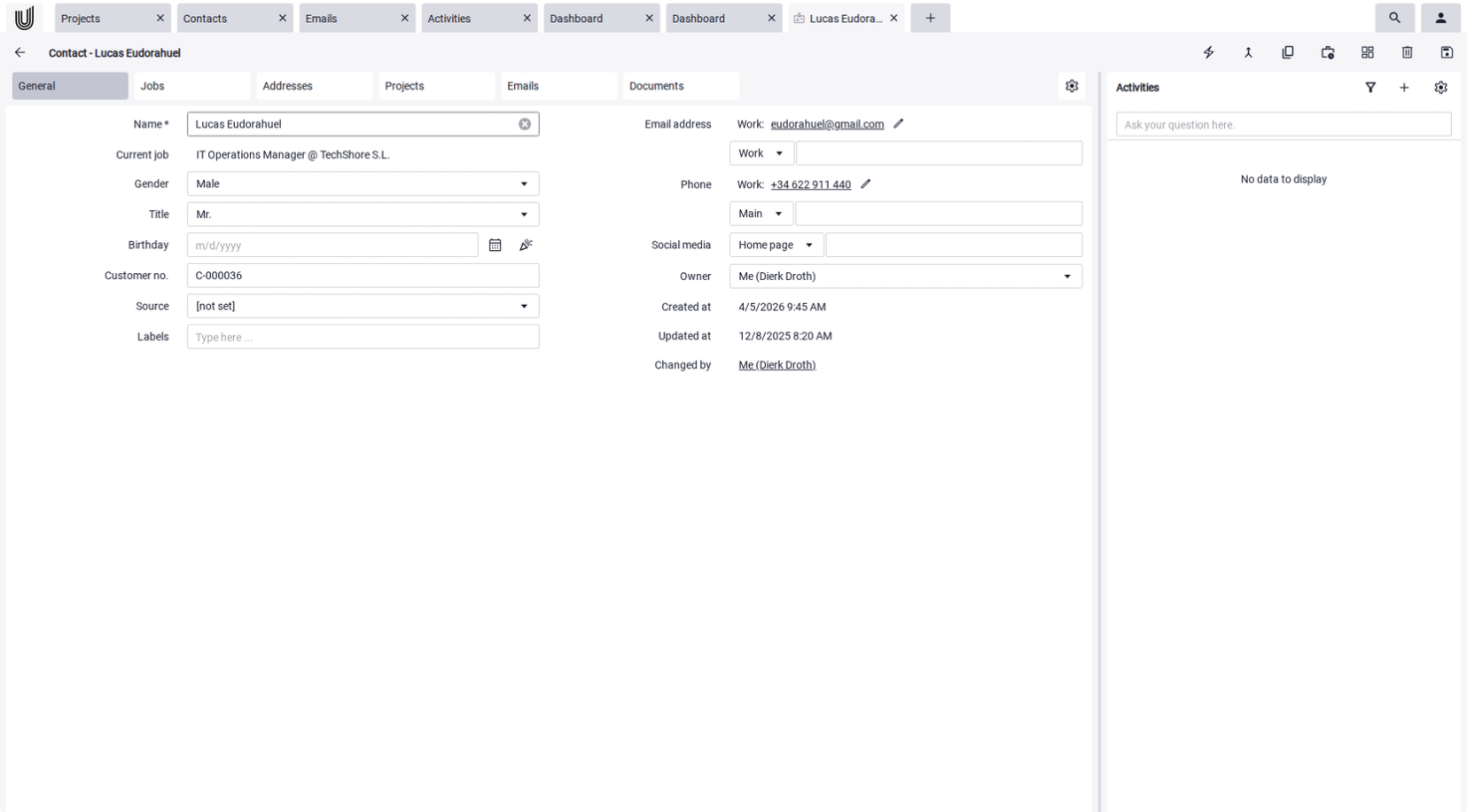
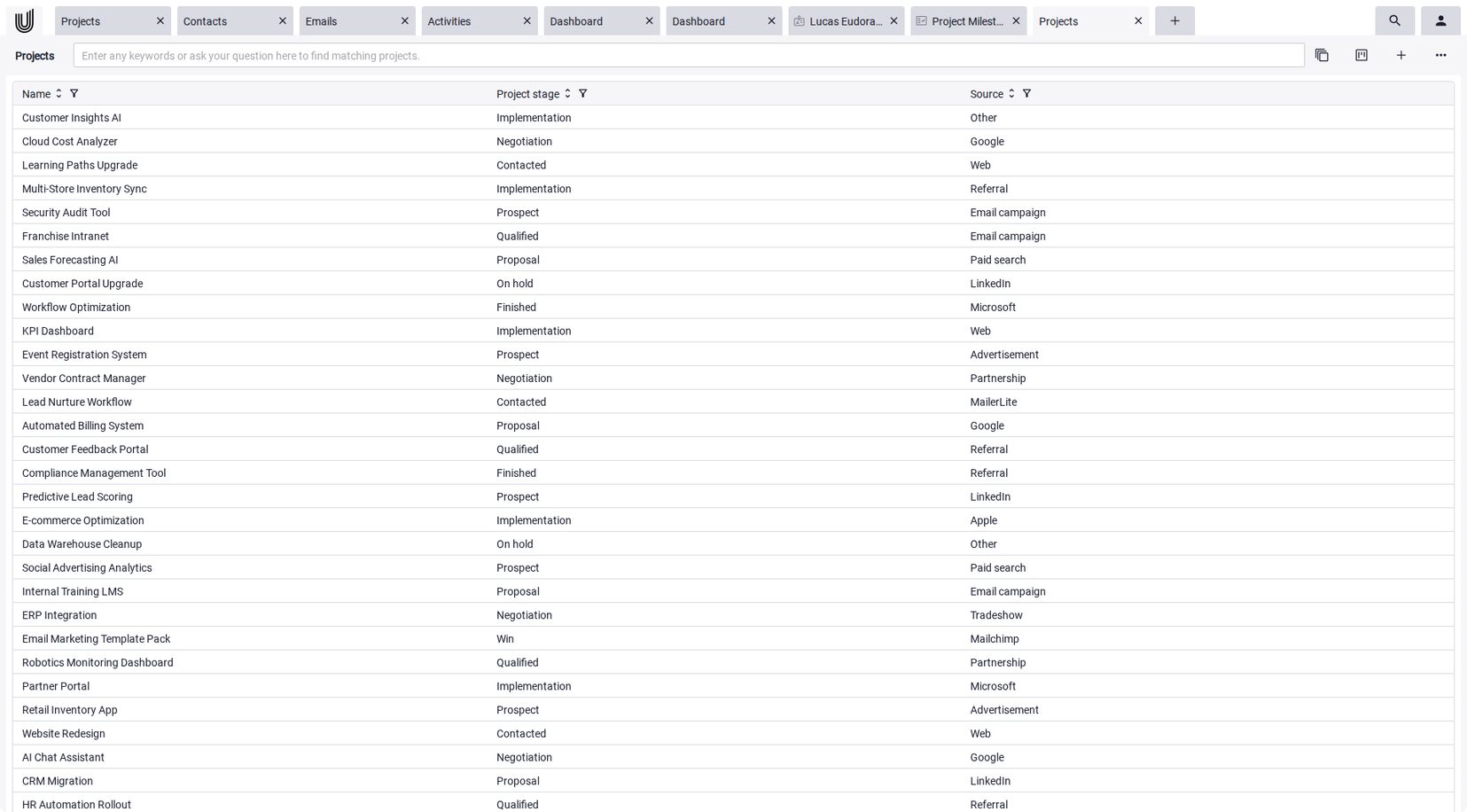
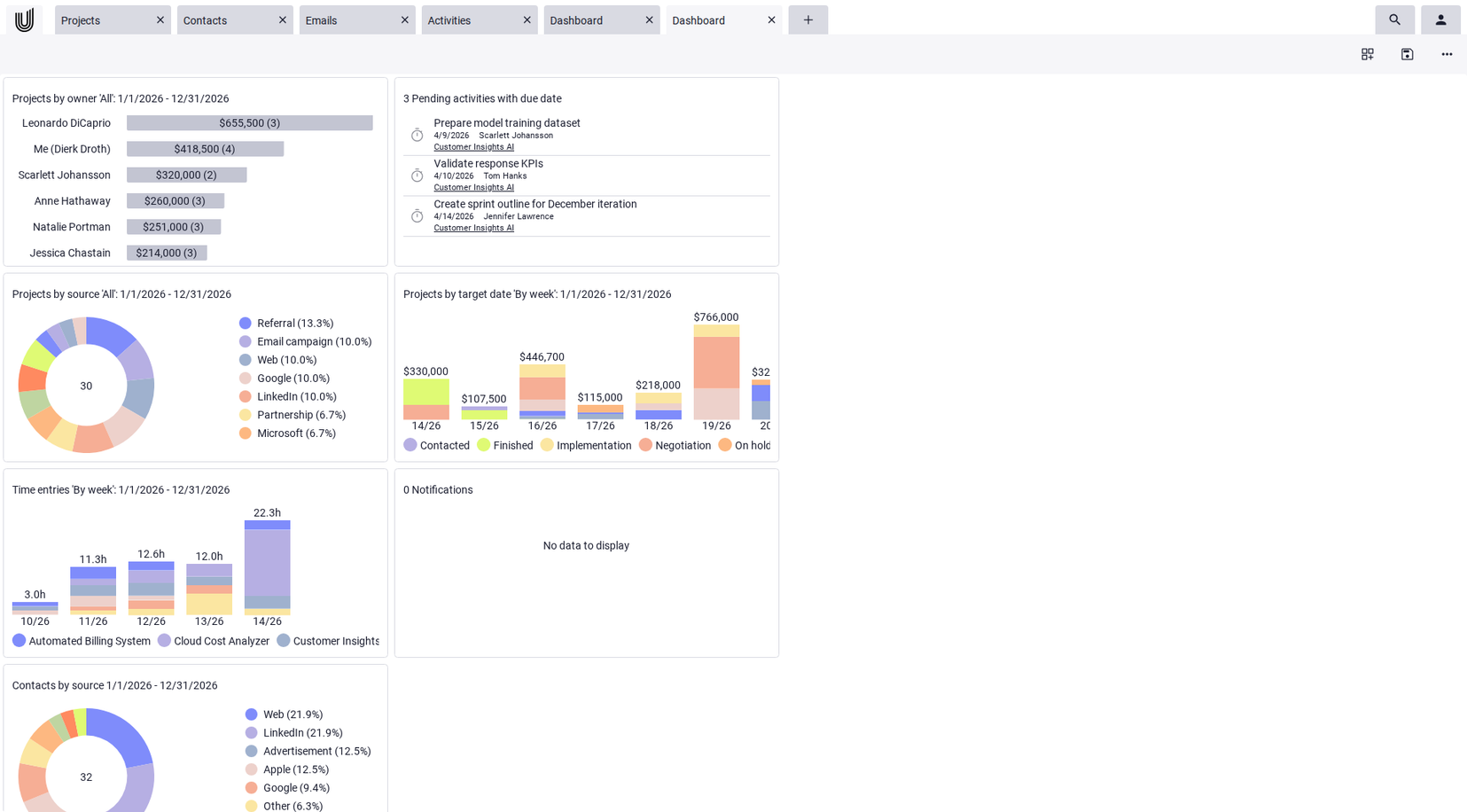
Unusual Suite is an all-in-one business software that combines CRM with project management, invoicing, documents, email, and other processes within a central platform.
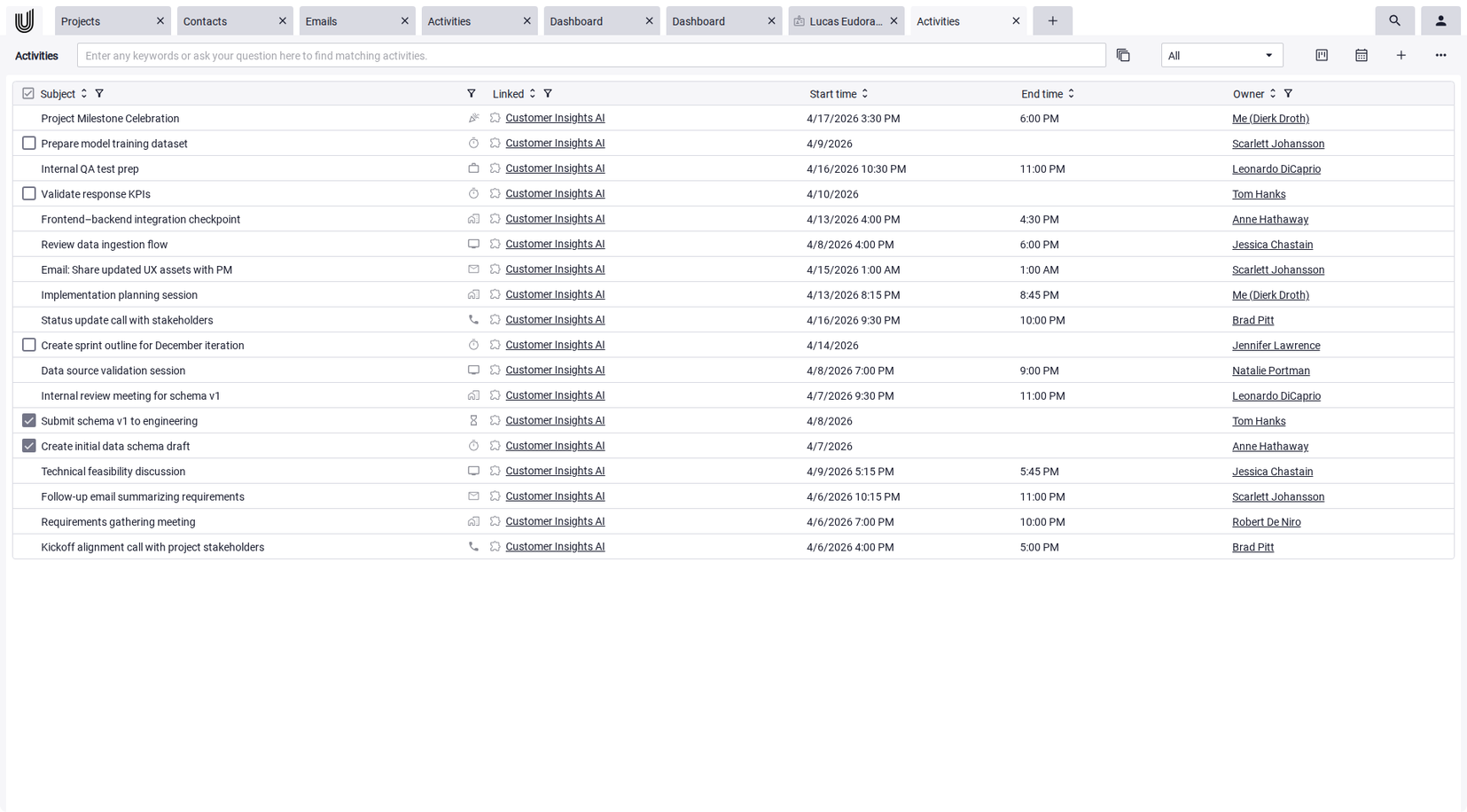
✓ Strengths: All-in-one (CRM, project management, email, invoicing, and documents in one system), deep data linking between tasks, contacts, and documents, flexible views (Kanban, Power-Grid, Calendar).
✗ Weaknesses: Not a complete ERP system for areas such as production or inventory management.
€ Price: Free version available; Pro version from approx. €29/user/month – view pricing here.
Suitable for: SMEs and service providers as well as startups that want to bundle and scale multiple processes in a single system.
Classification: Integrated business software with ERP-related functions, focused on operational processes.
ERP System for Small Companies – Which Suits Whom?
Not every ERP fits every company. Requirements vary depending on industry, team size, and way of working. What matters is which processes actually need to be covered in day-to-day operations and whether a complete ERP system is necessary or whether partial coverage is sufficient.
- Freelancers & small teams: Small teams often do not need full coverage of all business areas. Instead, the focus is usually on operational processes such as customer management, projects, and invoicing. Accordingly, leaner ERP solutions for small businesses are often used that cover precisely these areas and enable a quick start. Systems such as orgaMAX or Scoro are typical examples. Platforms like Unusual Suite are also used in this context, as they bundle several of these core processes – such as CRM and project management, contacts, email communication, and documents – within a shared workspace. More modular systems like Odoo can also be used but, depending on scope, require more intensive setup and are therefore not always immediately ready for use.
- SMEs with customer projects: For companies with several parallel customer projects, systems that combine CRM with project management and billing are useful. Solutions such as weclapp, Unusual Suite, or platforms like Scoro make it possible to manage all relevant information centrally and to link processes with one another. Which solution is suitable in each individual case, however, depends heavily on individual requirements, the desired functional scope, and the degree of customization needed.
- E-commerce: Xentral and Billbee are specifically optimized for trade processes. They automate orders, warehousing, and shipping, and integrate with shop systems and marketplaces. For companies with high transaction volumes, this automation is decisive for scaling and efficiency.
- Production: Manufacturing companies need systems with functions for material planning, production control, and inventory management. Specialized solutions like MRPeasy are specifically designed for manufacturing processes, while other ERP systems such as microtech provide additional production functions within a broader ERP approach.
Looking for a Leaner ERP Alternative?
If a full ERP feels oversized for your team, Unusual Suite bundles CRM, projects, invoicing, and team communication on a single platform – ready to use within minutes. Unusual Suite is a product of Unusual Software GmbH, which publishes this blog.
Try for freeCloud vs. On-Premise: Which ERP Solution Fits Small Companies?
When selecting an ERP system, the question often arises whether a cloud solution or an on-premise system is more suitable. The difference lies primarily in deployment, costs, and maintenance.
On-Premise ERP
On-premise systems are operated locally on the company's own servers. Companies must take care of infrastructure, maintenance, updates, and data security themselves. While this provides more control and individual customization options, it requires high upfront investments and internal IT expertise.
Cloud ERP
Cloud ERP works without local installation. Access takes place via the browser, while infrastructure, maintenance, and updates are fully handled by the provider. For small companies, this means lower entry costs, predictable monthly expenses, and significantly less technical effort.
Cloud ERP also offers clear advantages in terms of flexibility. Employees can work location-independently and access up-to-date data at any time. At the same time, systems can be rolled out more quickly and scaled as needed.
Which ERP Solution Fits Small Business Best?
For small businesses, a cloud-based ERP system is in many cases the more practical choice. It reduces complexity and enables a quick entry into structured processes.
Many modern ERP systems and CRM systems with ERP-related functions are now offered as cloud solutions (SaaS) by default and can be used directly via the browser. These include solutions such as Unusual Suite, weclapp, and Xentral. They take over infrastructure, maintenance, and updates entirely, enabling a quick and straightforward start.
Some providers additionally offer hybrid models in which on-premise operation is also possible alongside cloud usage. Depending on the provider, these include various solutions that give companies more flexibility when choosing their infrastructure.
Which variant makes sense ultimately depends on individual requirements. While cloud ERP is particularly convincing thanks to easy use and low entry barriers, on-premise can offer advantages in certain cases regarding control, data protection, or individual customization.
Conclusion: Using ERP Sensibly in Small Businesses
An ERP system for small businesses should above all simplify daily work and provide real relief. What matters is not the number of functions but how well a system fits the company's own processes. Small companies in particular need to assess whether a complete ERP system is even necessary. While ERP systems cover many areas such as accounting, inventory management, or controlling, they often also bring more complexity, costs, and implementation effort.
In many cases, business software that focuses on central processes and selectively covers individual ERP functions is sufficient. Depending on the use case, the suitable ERP software for small companies differs significantly. Systems like orgaMAX or Scoro are well suited for a quick start, while specialized ERP solutions for small businesses like Xentral or MRPeasy make sense for industry-specific requirements. Platforms such as weclapp or Haufe X360 cover multiple business areas.
It is important that the software can be rolled out quickly, used easily, and scaled as needed. Only then will it actually be used in everyday work. Solutions like Unusual Suite also bundle central processes such as CRM and project management and communication on a single platform and are particularly useful when the focus is on operational workflows without covering a complete ERP system.
In the end, what counts is not the "best" solution but the one that fits the business model, the requirements, and the daily work routine.
All-in-One Software with ERP Functions
Looking to manage your business processes in a more structured and centralized way? Unusual Suite combines functions such as project management, CRM, document management, and team communication in a single platform and can support you in organizing operational workflows more clearly. Unusual Suite is a product of Unusual Software GmbH, which publishes this blog.
Try for freeFAQ on ERP Systems
An ERP system is a software solution that connects all important business areas within a company. The goal is to manage data centrally and run processes efficiently. Typical functions include CRM, project management, accounting, and inventory management. The biggest advantage lies in the single source of truth: fewer errors, less coordination effort, and better overview.
The best-known ERP system worldwide is SAP, although it is primarily designed for large enterprises and only partially suitable as an ERP software for small companies. Beyond SAP, ERP systems differ depending on focus. All-round solutions like weclapp or Haufe X360 cover many areas. Specialized systems like Xentral or Billbee focus on specific use cases, e.g. e-commerce. In addition, there are integrated platforms like Unusual Suite that directly link CRM and project management and communication with one another.
It is worth distinguishing between two categories here. Fully open-source ERP systems like ERPNext are free at the software level, but hosting, setup, and maintenance still create effort and costs. Free tiers of commercial tools like Odoo (One-App model: one single module, unlimited users) or Unusual Suite (single-user free tier) are also available, but come with clear limits on users or functionality. In short: "free" rarely means "no limits" – it is worth checking exactly which users, modules, or support levels are actually included.
The right ERP for a small business depends on actual needs. Simple tools like orgaMAX are well suited for getting started; all-round systems like weclapp or Unusual Suite are ideal for combined processes. Specialized solutions like Xentral are particularly relevant in e-commerce. What matters is easy operation, quick rollout, and a central data structure. Ultimately, what counts is whether the system is actually used in daily work.